

Growth hormone (GH) peptides are among the most actively studied compounds in modern peptide research.
These molecules are widely used in laboratory settings to explore endocrine signaling, recovery mechanisms, and age-related physiological changes.
Researchers use these peptides to understand better the relationship between hormone signaling and processes such as cellular repair, body composition, and energy metabolism.
Among the peptides studied in this space, CJC-1295 and Ipamorelin have drawn particular interest.
Each works through a distinct mechanism but is frequently examined together as part of broader growth hormone research models.
Why Growth Hormone Peptides Remain a Key Focus in Peptide Research
Recent developments in endocrine and metabolic research have placed growing emphasis on growth hormone pathways and their downstream effects on the body.
GH release is tied to a wide range of physiological processes, including tissue repair, lean mass maintenance, and metabolic regulation.
Peptides that interact with GH-releasing pathways, such as CJC-1295 and Ipamorelin, are studied for their ability to influence these processes in controlled laboratory environments.
Research models often examine how these compounds affect GH pulse patterns, recovery-related signaling, and long-term physiological changes associated with aging.
Similarly, CJC-1295 with DAC (Drug Affinity Complex) is of particular interest in this area. It is considered to be ideal for advanced research focused on growth hormone and IGF-1 pathways.
The DAC modification gives this peptide an extended half-life, helping researchers study sustained GH-releasing activity over longer time frames.
Ipamorelin, on the other hand, is studied for its selective action on GH secretion with minimal impact on other hormones. This makes it useful in research focused specifically on isolating GH-related outcomes.
Together, these compounds support a growing body of research into anti-aging peptide research, muscle recovery peptides, and broader peptide research compounds used across endocrine and metabolic studies.
Supporting Your Research With Pure Aminos
Looking to buy peptides online for your growth hormone and recovery-focused research?
At Pure Aminos, we offer a wide range of high-quality peptide research compounds to support your work.
1. CJC-1295 DAC
CJC-1295 with DAC is a long-acting synthetic peptide studied for its role in sustained growth hormone signaling, metabolic regulation, and research into age-related GH decline.
2. Ipamorelin
Ipamorelin is widely used in studies examining GH secretion patterns, recovery-related pathways, lean tissue preservation, and overall metabolic efficiency.
3. Tesamorelin
Tesamorelin is a high-purity synthetic peptide studied for its role in endocrine signaling, GH release mechanisms, and metabolic regulation pathways. It is one of our top-selling growth hormone peptides, with particular research interest in its effects on visceral fat reduction, making it a standout compound in metabolic and body composition studies.
4. CJC-1295 and Ipamorelin Blend
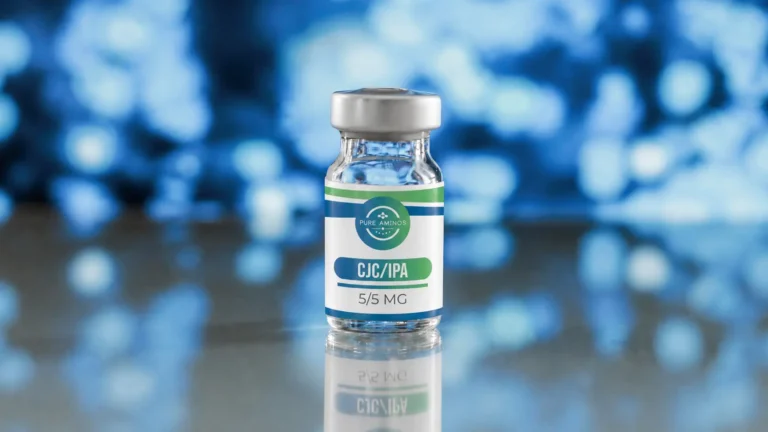
The CJC/IPA 5/5mg blend is a high-quality combination of CJC-1295 peptide with Ipamorelin. It is a convenient dual-peptide formula designed for research applications focused on growth hormone signaling, along with other areas such as recovery pathways, body composition, sleep support, and performance optimization.
You can find anti-aging research peptides such as SNAP, along with many other research peptides, across our full catalogue!
FAQ
1. Why are CJC-1295 and Ipamorelin often studied together?
Both peptides interact with growth hormone-releasing pathways, but through different mechanisms. Studying them together allows researchers to examine combined effects on GH secretion patterns in peptide therapy research.
2. What makes CJC-1295 with DAC different from standard CJC-1295?
The DAC modification extends the peptide’s half-life, allowing for sustained activity in research models. This extended duration is specific to the DAC form and is not a property of CJC-1295 on its own.
3. What is the focus of muscle recovery peptide research?
Muscle recovery peptide research examines how GH-related signaling influences tissue repair, lean mass maintenance, and recovery-related cellular processes following physical stress in research models.
4. What type of research materials does Pure Aminos provide?
Pure Aminos supplies high-quality research-grade peptides that are used in endocrine, metabolic, and recovery-focused research under controlled experimental conditions. All research materials are produced under strict quality control systems including consistency checks, purity validation, and careful handling of protocols.
5. Are Pure Aminos products intended for human use?
No. All products are strictly intended for laboratory and research purposes only. They are not approved for human consumption and are supplied exclusively for controlled scientific investigation.
Free shipping on orders over $150. Bulk and referral discounts available.
Have questions? Feel free to reach out to us. We will be happy to help you find exactly what you need for your research. You can also give us a call or drop a text at 765-823-9032!
Disclaimer: All products are intended strictly for research purposes only and not for human consumption.