

Why do some research peptides cost significantly more than others? What factors influence pricing in the research peptide market?
In this article, we will answer these questions by providing a clear and structured overview of research peptides cost, the major factors affecting peptide pricing, and why certain compounds may be more expensive than others.
By the end, you will develop a solid understanding of peptide cost differences in research, how peptide pricing is evaluated, and what leads to cost differences across suppliers and products.
Key Drivers of Peptide Pricing
To understand what drives peptide cost, it helps to first know how they are produced.
Peptides are not simple compounds that can be manufactured quickly or in large batches with minimal processing.
They are created through highly controlled synthesis methods that require precision at multiple stages.
For example, many research peptides are produced using a process called Solid-Phase Peptide Synthesis (SPPS), where amino acids are added one by one in a carefully controlled sequence.
Even a small error during this process can affect the final structure of the peptide.
Because of this, peptide production often involves:
- Specialized raw materials
- Controlled laboratory conditions
- Multiple purification steps
- Analytical testing and verification
These requirements contribute directly to overall peptide pricing.
Understanding Research Peptides Cost
When looking at research peptide pricing, it is important to understand that cost is not determined by a single factor.
Research peptides cost is usually influenced by a combination of:
- Peptide complexity
- Length of the amino acid chain
- Purification requirements
- Production scale
- Storage and stability considerations
- Testing and analytical processes
This is why two peptides of similar size may still differ significantly in price.
Factors Affecting Peptide Pricing
There are several key factors affecting peptide pricing in research settings.
Let’s break them down individually.
1. Peptide Length and Complexity
One of the biggest factors affecting cost is the length of the peptide chain.
Shorter peptides are generally easier to produce because they involve fewer synthesis steps.
Longer peptides, on the other hand, require:
- More amino acid additions
- More reaction cycles
- Higher chances of synthesis errors
As peptide length increases, production becomes more time-consuming and technically demanding.
Complex peptide structures may also require special modifications or protective groups during synthesis. This can further increase production costs.
2. Purification Requirements
After synthesis, peptides often go through purification processes to separate the intended compound from other components created during production.
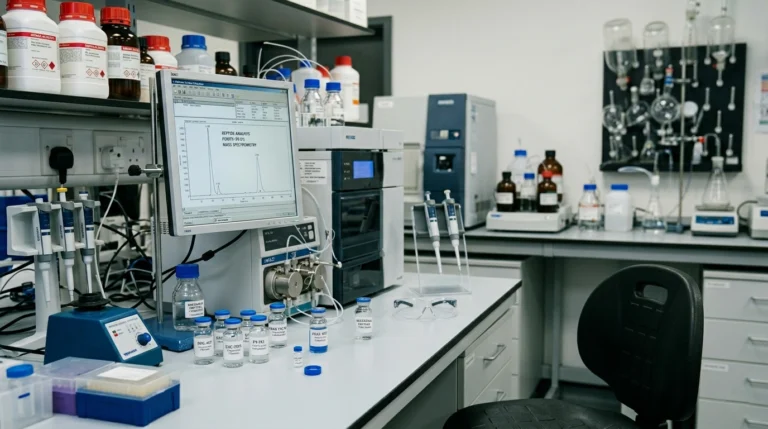
One commonly used method is High-Performance Liquid Chromatography (HPLC).
HPLC separates different components within a sample based on their chemical properties. This allows researchers to analyze composition and purity levels.
The higher the purification standard required, the more time and resources are needed during production.
As a result, peptides requiring extensive purification may cost more.
3. Raw Material Quality
The quality of starting materials can also influence peptide pricing.
Peptide synthesis relies on amino acids and chemical reagents that must meet specific standards for controlled research applications.
Higher-grade materials generally increase manufacturing costs but may support better consistency during synthesis.
4. Analytical Testing and Verification
Research peptides are commonly evaluated using analytical techniques to examine composition and consistency.
In addition to HPLC, methods such as Mass Spectrometry (MS) may be used to confirm molecular weight and structural characteristics.
These testing procedures require:
- Specialized equipment
- Technical expertise
- Additional processing time
As a result, analytical verification contributes to overall peptide pricing.
5. Storage and Stability Requirements
Some peptides are more sensitive to environmental conditions than others.
Factors such as:
- Temperature
- Moisture
- Light exposure
Can impact peptide stability over time.
To help preserve structural integrity, certain compounds may require:
- Specialized packaging
- Refrigerated handling
- Controlled shipping methods
These additional requirements can increase operational and logistical costs.
6. Production Scale
Peptides produced in smaller batches may cost more because manufacturing resources are spread across fewer units. In contrast, compounds produced in larger quantities may benefit from greater production efficiency.
However, niche or highly specialized peptides often have lower production volumes, which can contribute to higher pricing.
7. Research Demand and Availability
Another important factor is market demand within research environments.
Some peptides are studied more frequently due to growing scientific interest. Increased demand may affect:
- Production scheduling
- Material sourcing
- Supplier availability
At the same time, certain peptides may require more specialized synthesis methods, making them less widely available.
Together, these factors can influence market pricing.
Why Pricing Can Vary Between Suppliers
Different suppliers may use different:
- Manufacturing processes
- Testing procedures
- Packaging methods
- Operational standards
These variations also contribute significantly to differences in overall peptide pricing.
So, if you’re ever confused about why CJC-1295 with DAC 5mg comes with a different price tag than DSIP 5mg, come back and review these factors!
Looking to buy peptides online? Make sure to check out our current products.
At Pure Aminos, we offer premium peptide solutions by focusing on quality, compliance, and consistency. Our experienced team takes a science-first approach, managing every step from product selection to delivery with care and accuracy.
All our compounds are prepared using structured synthesis methods with a focus on secure packaging, clear labeling, and research-focused documentation.
If you have any questions, concerns, or requests, please feel free to reach out. You can give us a call or drop a text at 765-823-9032. Our team is always happy to help!
If you want to learn more about peptide safety in research settings, check out our previous guide.
Disclaimer: All products are intended strictly for research purposes only and not for human consumption!